Istanbul is not only Turkey's largest city but also one of the leading student megacities in the region. International applicants pick it for the concentration of strong universities, the developed infrastructure, access to the international job market and the dynamic urban environment. The universities of Istanbul for international students in 2026 amount to more than 60 institutions across every profile and level, from the oldest state institutes to young private campuses teaching in English.
How many universities are there in Istanbul?
The city has more than 60 universities: 14 state and around 44 private. State universities — Istanbul University, Boğaziçi University, ITU — admit international students through a strict competition. Private universities — Koç, Sabancı, Bahçeşehir, Özyeğin and others — offer more flexible admission conditions and a wide choice of English-taught programmes. Many Istanbul universities are in the top 300 of the international rankings.
To navigate the wide choice of options, use the catalogue of Turkish universities on the Edu Turkish site.
The best state universities in Istanbul
Istanbul University (İstanbul Üniversitesi)
- Founded: 1453
- Status: state
- District: Beyazıt
- Strong fields: medicine, law, journalism, economics, natural sciences
Istanbul University is Turkey's oldest university, combining centuries-old traditions with modern education standards. International students can apply, but the quotas are limited and teaching is mostly in Turkish.
Tuition: $300 to $1,500 per year — affordable, but competition is fierce.
How to get in: international applicants need the YÖS exam and a confirmed level of Turkish. The school certificate and entrance exam results are also taken into account.
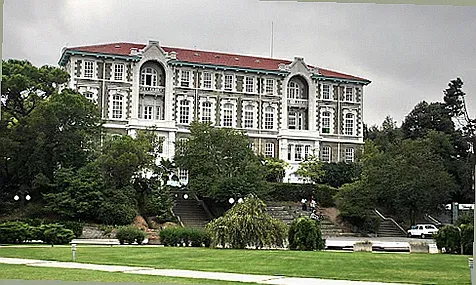
Boğaziçi University
- Founded: 1863
- Status: state
- District: Bebek
- Strong fields: engineering, economics, social sciences, linguistics
Boğaziçi University is one of the most prestigious universities in the country and the only state university in Istanbul teaching in English. It attracts the highest interest from international students, but competition here is also among the toughest.
Tuition: $500 to $2,000 per year — relatively moderate, but places for international students are very limited.
Admission conditions: you cannot skip entrance exams. State universities require the YÖS or TR-YÖS.
Leading private universities in Istanbul
Private universities open up significantly more opportunities for international students: more places, English-taught programmes and broad scholarship packages.
The best-known universities:
- Koç University — recognised as Turkey's best private university, the strongest training in economics and business, in the global top 500
- Sabancı University — a research university with a focus on engineering and interdisciplinary education
- Bahçeşehir University (BAU) — located in Beşiktaş by the Bosphorus, active international cooperation
- Özyeğin University — recognised as one of the best in business, with a strong Executive MBA programme
Tuition at private universities: $3,000 to $25,000 per year depending on the programme. Many universities offer international students discounts of up to 75% for a high GPA.
In-demand specialties in Istanbul
Istanbul is Turkey's economic and business centre. The city's job market most actively absorbs graduates in the following fields:
- IT and engineering: developers, data analysts, system architects
- Finance and economics: accountants, business analysts, financial managers
- Tourism and hospitality: managers, marketers, event-tourism specialists
- Medicine: doctors, pharmacists, biotechnology specialists
Tuition: state vs. private universities
State universities (Istanbul University, Boğaziçi, ITU) offer tuition from $300 to $2,000 per year with the mandatory YÖS / TR-YÖS and a tough competition. Private universities cost $3,000 to $25,000 per year — but they admit on the basis of the school certificate, often with no additional exams. With a high GPA many private universities offer a discount of $750 or more.
The most budget-friendly options are state universities in smaller cities — for example Anadolu in Eskişehir. In Istanbul itself state universities are cheaper, but harder to get into.
How to enter an Istanbul university without exams
Getting in without entrance exams in Istanbul is entirely realistic — with the right choice of university:
- Private universities admit on the basis of the school certificate and a language certificate
- A number of universities take SAT results or international diplomas (IB, A-Level) into account
- For state universities the YÖS or TR-YÖS exam is mandatory
Duration of study at Turkish universities
Study in Turkey is organised under the Bologna system, which gives students flexibility:
- Bachelor's: 4 years
- Medicine: 6 years
- Master's: 2–3 years
- Doctoral: 4–5 years
The Bologna system allows you to change pace: finishing earlier or combining studies with work is all possible.
Which Istanbul university is best by field
In the view of Edu Turkish specialists and student reviews:
- Business and economics — Özyeğin University
- Engineering — Sabancı University
- Medicine — Istanbul Medipol University
- Humanities — Sabancı University
- Architecture — Kadir Has University
The choice depends on the specialty, the budget and career plans. State universities give prestige and a low price; private ones give flexibility and an English-speaking environment.