Getting a degree from a foreign university after year 11 is a completely realistic goal. For graduates from Russia, Kazakhstan, Ukraine and other CIS countries overseas universities have long stopped being exotic and have become a deliberate strategy. Some go for an international degree, some for the language environment, some for the option of staying to work in another country.
This guide is for those who understand the options and want to see the specifics: where you can enrol right after school, what you will need, how to prepare and what to do with the documents.
Who can study abroad after finishing school?
Graduates with a year-11 school certificate can try to enrol in most countries in the world. A Russian (and generally post-Soviet) secondary school certificate is recognised as a sufficient condition at many universities — provided your academic record is good and you have confirmed your language level.
An important caveat: in a number of countries school education lasts 12 or 13 years — and in that case a Russian certificate formally "falls short" of local requirements. In such cases universities may require a preparatory course (Foundation, Pathway). But this is not a universal practice: many overseas universities accept an 11-year education when the applicant has a good GPA and a language certificate.
Why go abroad to study: the real advantages
An overseas education is not just a line on the CV. Here is what a graduate who takes this step really gets:
An international degree. It is recognised by employers and universities all over the world. This is especially valuable if you plan to relocate or work at an international company in the future. A degree from an accredited Turkish university, for example, lets you enrol in master's programmes in any country in Europe or the United States.
A language environment. No course can replace a year of living in a country where you have to think and speak in a foreign language. Your level of proficiency grows quickly and organically — especially when the language is used daily not only in class but in shops, on transport and with classmates from other countries.
Independence and perspective. Living abroad forces you to solve problems on your own — from renting an apartment to dealing with foreign bureaucracy. This builds practical skills that no curriculum can provide. You learn to adapt quickly and find solutions in unusual situations.
Scholarships and grants. Many countries offer financial support to international students. For example, the Turkish state programme Türkiye Bursları covers 100% of tuition, accommodation and pays a monthly stipend — all at once. Individual universities offer their own grants based on academic, sporting or creative achievements.
Career prospects. Graduates of international programmes are in demand: employers value cross-cultural experience, language skills and the ability to work in diverse teams. Statistics show that specialists with overseas degrees progress up the career ladder faster on average and have a wider geography of employment opportunities.
Which country should you go to after year 11?
The answer depends on several variables: budget, language of instruction, availability of scholarships and how willing the country is to accept graduates with an 11-year school curriculum.
Countries with direct admission — those that recognise a Russian certificate and allow admission without an extra year: Turkey, France, Sweden, South Korea, as well as a number of universities in Spain, the Netherlands, Ireland, Canada, Malaysia and China. In these countries an 11-year secondary education is considered sufficient for bachelor's admission — provided the other requirements (language certificate, good grades) are met.
Countries that require a preparatory year — the United Kingdom, the United States, Australia require a Foundation or Pathway programme because of the difference in the number of school years. In Germany most international graduates need a free year at a Studienkolleg — the equivalent of a preparatory course that evens out the academic difference.
Hybrid options are offered by the Netherlands and Ireland: direct admission is possible, although preparatory programmes exist and are often recommended.
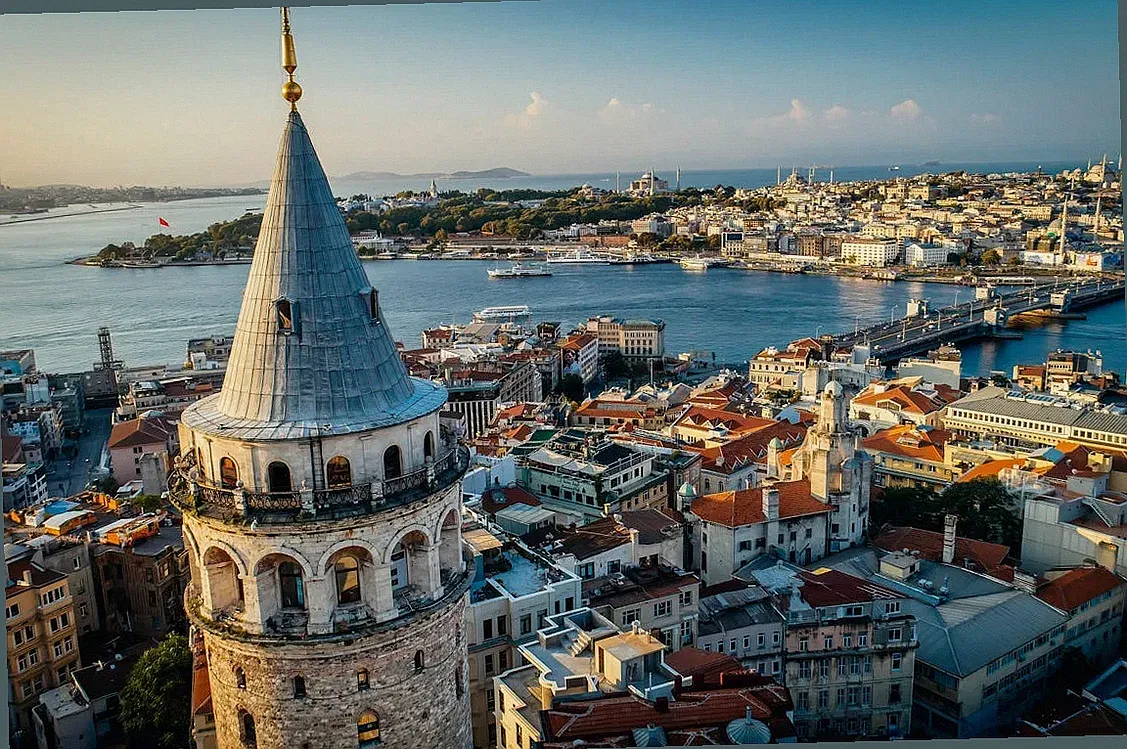
Among all the options, Turkey stands out in particular: private universities here admit international applicants without entrance exams, looking only at school grades. Add to this affordable tuition, a Mediterranean climate and the option of getting a degree with which entering a European master's programme is entirely realistic. That is why Turkey remains one of the main destinations for students from Russia, Kazakhstan, Uzbekistan and other CIS countries.
Turkey: the most accessible option for CIS applicants
Turkish universities today are one of the main streams for students from post-Soviet countries. There are several reasons.
Private universities admit without the YÖS or the SAT. A school certificate and language confirmation are enough. Many offer English-taught programmes, modern campuses and internships at international companies. Tuition is paid, but scholarships and discounts for top students are standard practice.
State universities require the TR-YÖS exam (a centralised ÖSYM test that has replaced the scattered university YÖS exams). Competition is tougher, especially for medicine and engineering. The advantage is a lower tuition fee, sometimes almost symbolic. The main language of instruction is Turkish.
The Türkiye Bursları scholarship is a state programme for international students. 100% of tuition plus accommodation plus a monthly payment. Competition is very high, so excellent grades, a persuasive motivation letter and confirmed achievements are needed. Applications are submitted online at turkiyeburslari.gov.tr.
A list of universities of Turkey with detailed information on programmes and admission conditions is available on our website.
How to prepare for admission: a step-by-step plan
Success is largely determined by how early you started preparing. Ideally, start a year before your planned admission, and in some cases (Türkiye Bursları scholarships, top universities) — even earlier.
Academic performance. Most Turkish private universities require a GPA of 70/100 or higher for years 10–11. The higher the score, the greater your chances of a scholarship or a discount on admission. If your grades in year 10 were lower than you wanted, focus on the final year: many universities look at the trend, not just the final value.
Language exams. For English-taught programmes you need TOEFL iBT — a minimum of 70–80 points depending on the university (some universities require 90+). IELTS is not accepted in Turkey — this is a fundamental point that often surprises applicants. If you do not have a certificate, most private universities will offer an internal language test before studies begin — this is free, but if the result is insufficient you will have to spend a year on a preparatory language programme. For Turkish-taught programmes you need TÖMER at B2–C1 level or taking a language course directly at the university. Plan the exam in advance: obtaining the official certificate takes several weeks after the exam itself.
Entrance exams. If you have chosen a state university, prepare for the TR-YÖS (the centralised ÖSYM exam) a year before admission. The test assesses mathematics and logic. You can study on your own using past-year collections or sign up for preparation courses. For some state universities SAT results serve as an alternative to the TR-YÖS — check the requirements of the specific university.
Gathering documents. The list is standard: a notarised translation of the school certificate with a transcript (into English or Turkish), an international passport, a language certificate, biometric photos and a motivation letter. For scholarships you may need recommendations from teachers on an official school letterhead with a signature. All documents must be legible, translations must be carried out by a certified translator. Start preparing documents no later than 3–4 months before the deadline: notarised translations and apostilles take time.
School certificate nostrification (Denklik). Admission to Turkey may require denklik — an official document from the Turkish Ministry of Education (MEB) confirming the equivalence of your school certificate. This is a separate procedure submitted through the e-Devlet state portal. It requires an ikamet (residence permit), so this step is usually carried out after arriving in Turkey.
Application submission. Most Turkish universities accept applications online through their own portals. Fill in the form, upload document scans and pay the registration fee (some universities charge an application fee of $50 to $100). Apply to several universities at once: it does not violate the rules and significantly reduces the risks. After submission, watch your email — the university may request clarifications or invite you to an online interview.
How to choose a university?
Choosing a university is a key decision that will shape the quality of your life for four years ahead. Approach it systematically: compare options against several criteria rather than taking the first one that comes up.
Ranking and reputation. Several universities in Turkey are in the global rankings from Times Higher Education and QS: Sabancı University (top 400 by THE), Koç University (top 500), Özyeğin University, Bahçeşehir University — names recognised by employers and admissions committees in Europe and beyond. A university's reputation directly affects how your degree is perceived.
Programme and language. Make sure the specialty you need exists at the chosen university, that it is taught in a language you are comfortable with and that the curriculum meets your expectations. Compare courses, subjects and the practical component of different universities: some are stronger in engineering, some in business or humanities. Most private universities offer a significant share of their programmes in English.
Cost and scholarships. Private universities are in the range of $3,000 to $15,000 per year depending on prestige and specialty. Discounts for high scores can reach 50% — for example, Özyeğin University and Bahçeşehir University are known for generous conditions for top students. State universities are significantly cheaper. The Türkiye Bursları scholarship covers everything — but competition is enormous.
Campus and infrastructure. Dormitory, laboratories, gyms, libraries, student clubs — this affects the quality of life during your studies. Sabancı University and Özyeğin University are known for their large modern campuses. Bahçeşehir is in central Istanbul, right on the Bosphorus — a unique urban atmosphere. Look at photos, read forums and reviews from real students.
Career connections. Pay attention to whether the university has internship programmes, employer links and career development centres. This is especially important for those who plan to stay and work in Turkey or enter the international market after graduation.
A list of the best Turkish universities to apply to
Below are universities that consistently admit international students and have strong international standing. The list is not exhaustive — there are more than 200 universities in Turkey, and among them there are many worthy options for every taste and budget.
Sabancı University — Istanbul, a leading private university, top 400 of the global Times Higher Education rankings. Strong fields: engineering, business, materials science, computer science. Teaching is entirely in English. A campus of more than 1.26 million square metres with dormitories, laboratories and sports facilities. A high graduate employment rate on the international market.
Özyeğin University — Istanbul, founded in 2008, a private university rapidly gaining prestige. Specialisations: business, finance, IT, aviation. The ÖzU-X startup incubator, an active Erasmus+ programme, discounts of up to 50% for top students. A campus on the Asian side of Istanbul with modern infrastructure.
Bahçeşehir University (BAU) — in central Istanbul, in the Beşiktaş district, on the Bosphorus. Programmes in English: architecture, medicine, media, international law. Active academic exchange programmes with partner universities in Europe and the United States. In the top 1,000 universities worldwide according to Times.
METU (Middle East Technical University) — Ankara, a state university. One of the strongest technical universities in Turkey with long-standing traditions. Teaching in English, high competition among international applicants, a TR-YÖS or SAT with a high score is required. A relatively low tuition fee.
Koç University — Istanbul, an elite private university, top 500 of the global rankings. English-taught programmes in business, biology, medicine and humanities. The campus is equipped with the latest technology, with great attention paid to research. International students value Koç for the high level of teaching and the broad scholarship opportunities.
If you are interested in medicine — take a look at Hacettepe University in Ankara. Creative applicants should look at the Istanbul University of the Arts. Turkey offers options for every taste — from young dynamic universities to the oldest universities with centuries of tradition.
These are just a few examples. Student reviews about studying in Turkey will give you a real-world view of what studying at specific universities looks like from the inside.
Application deadlines at Turkish universities
Deadlines are where you cannot afford to make a mistake. Miss one and you lose a year. Here is how the admissions calendar at Turkish universities works.
State universities. Document submission opens around April and closes by July. The TR-YÖS exam is held between May and July depending on the specific university. Results are announced and admission letters sent out by mid-August. Final registration of admitted students takes place in September before classes start. This means that by the end of the summer the applicant must already be in Turkey with the original documents for official enrolment.
Private universities. Here the system is more flexible and resembles the Western model: several waves of admissions called Early Admission and Regular Admission. Many private universities open applications as early as January–February of the admission year. Admission continues until the end of August, with an important caveat: popular fields close long before that deadline. A response to an application comes quickly — usually within 2–4 weeks. The earlier you submit, the wider the choice of programmes and the higher your chance of getting a good tuition discount.
Preparatory language programmes. If the plan is to first take an English Prep Year or intensive Turkish courses (TÖMER) at the university, the dates may differ slightly. Some universities accept students into language programmes until October. Check the specific university's website.
A practical tip. Experienced applicants recommend this timeline: start preparing documents in winter, take the language test no later than March and submit applications in April–May. That leaves enough time for the student visa and a relaxed move. Every university publishes up-to-date deadlines on its International Admissions page — check there and do not rely on unofficial sources.
Documents for applying to a foreign university
Standard package for applying to a Turkish university after year 11:
- Secondary school certificate — original and notarised translation into English or Turkish. If you are applying before receiving the certificate — most universities accept a letter and a grade sheet.
- Transcript of grades for years 10–11 — translated and notarised.
- International passport — a copy of the main page. The validity period must cover the study period.
- Language certificate — TOEFL iBT (for English programmes) or TÖMER (for Turkish-taught programmes). Without a certificate — passing the university's internal test.
- TR-YÖS or SAT results — for state universities or particular top private ones.
- Motivation letter — a description of your academic goals and reasons for choosing this particular university and programme.
- Recommendation letters — for competitive programmes or scholarship applications: 1–2 recommendations from teachers on an official school letterhead.
- Additional materials — olympiad and competition diplomas, research publications, certificates of additional education, portfolio (for creative specialties).
All documents are uploaded when applying online or sent by email — depending on the requirements of the specific university. An incomplete package or unclear scans can lead to delays or rejection. Make sure you have good-quality digital copies of all documents.
Studying in Turkish or English?
The choice of language of instruction is a strategic decision that determines admission requirements, the character of student life and further career opportunities.
Studying in English. Most private universities in Turkey offer a wide set of English-taught programmes. At Sabancı, Özyeğin and Koç University a significant share or all specialties are taught exclusively in English. Pros: you keep improving the language, get a degree that is clear to employers around the world and build an international network of contacts. Admission requires TOEFL iBT (from 70–80 points) or passing the university's internal language test. With an insufficient level you may be placed on a free English Preparatory Year at the university. The downside is that knowledge of Turkish remains optional and integration into local life outside campus takes extra effort. However, most universities offer basic Turkish courses for international students.
Studying in Turkish. State universities work mostly in Turkish. Some private universities also have Turkish-taught programmes — and often a wider choice of specialties is available specifically in Turkish. The advantage is deep immersion in the culture, lower tuition at state universities and prospects for working at Turkish companies. But serious language preparation is needed: a TÖMER certificate of at least B2. If you do not have one, the university will offer an intensive year of Turkish. The first months can be difficult because of the language barrier, but most students say they feel confident enough by the end of the first year.
Bottom line. If the goal is an international career and the ability to work anywhere in the world — choose English. If you plan to build your life in Turkey or work at Turkish companies — Turkish will give you a competitive edge. An important point: there is practically no Russian-language teaching at Turkish universities, so you will have to work in one of these two languages.
Student visa and residence permit
After receiving a Letter of Acceptance the next step is to apply for a student visa. Citizens of Russia and a number of CIS countries enter Turkey without a visa for up to 90 days, but for long-term studies (more than 90 days) a national "student" visa (Öğrenci) is required.
After entering Turkey. Within the first month of your stay you need to apply for a student residence permit (ikamet). Documents are submitted to the local migration office, often with help from the university's international department. The residence permit is issued for a year and is renewed annually for the period of studies.
Important: entering on a tourist visa or visa-free and then trying to switch to student status will not work. The tourist regime does not allow such a switch. Obtain the correct student visa in advance, before departure.
Want to get a personal consultation on choosing a university and submitting documents? The Edu Turkish team helps with the move to Turkey at every step — from picking a university to arranging an ikamet. Check out the frequently asked questions about studying in Turkey or contact us directly.