İstanbul Topkapı Üniversitesi traces its history back to 21 April 2009, when the Council of Ministers of the Republic of Turkey (resolution No. 14944) established Plato Meslek Yüksekokulu (Plato Vocational School) — a vocational higher school founded by the İrfan Saray Education Foundation. The visionary leader and chairman of the new institution's board of trustees was Sinan Çetin — a world-famous Turkish film director and producer who brought together artists, business people and academics around the project. The school initially opened with four departments in the Beyoğlu district, focusing on training specialists in media, design, technology and communications. Soon afterwards, the institution moved to the historic Balat district on the European side of Istanbul, gaining its first full campus surrounded by the unique architecture of the Old City.
In 2016, Plato Meslek Yüksekokulu underwent a major transformation: by decision of YÖK (the Council of Higher Education of Turkey), the institution received full university status and was renamed İstanbul Ayvansaray Üniversitesi. This made it possible to significantly expand the academic offering — bachelor's and master's programs were opened, and new faculties and research centers were created. The university began to develop its campus infrastructure rapidly, opening sites in various districts of Istanbul.
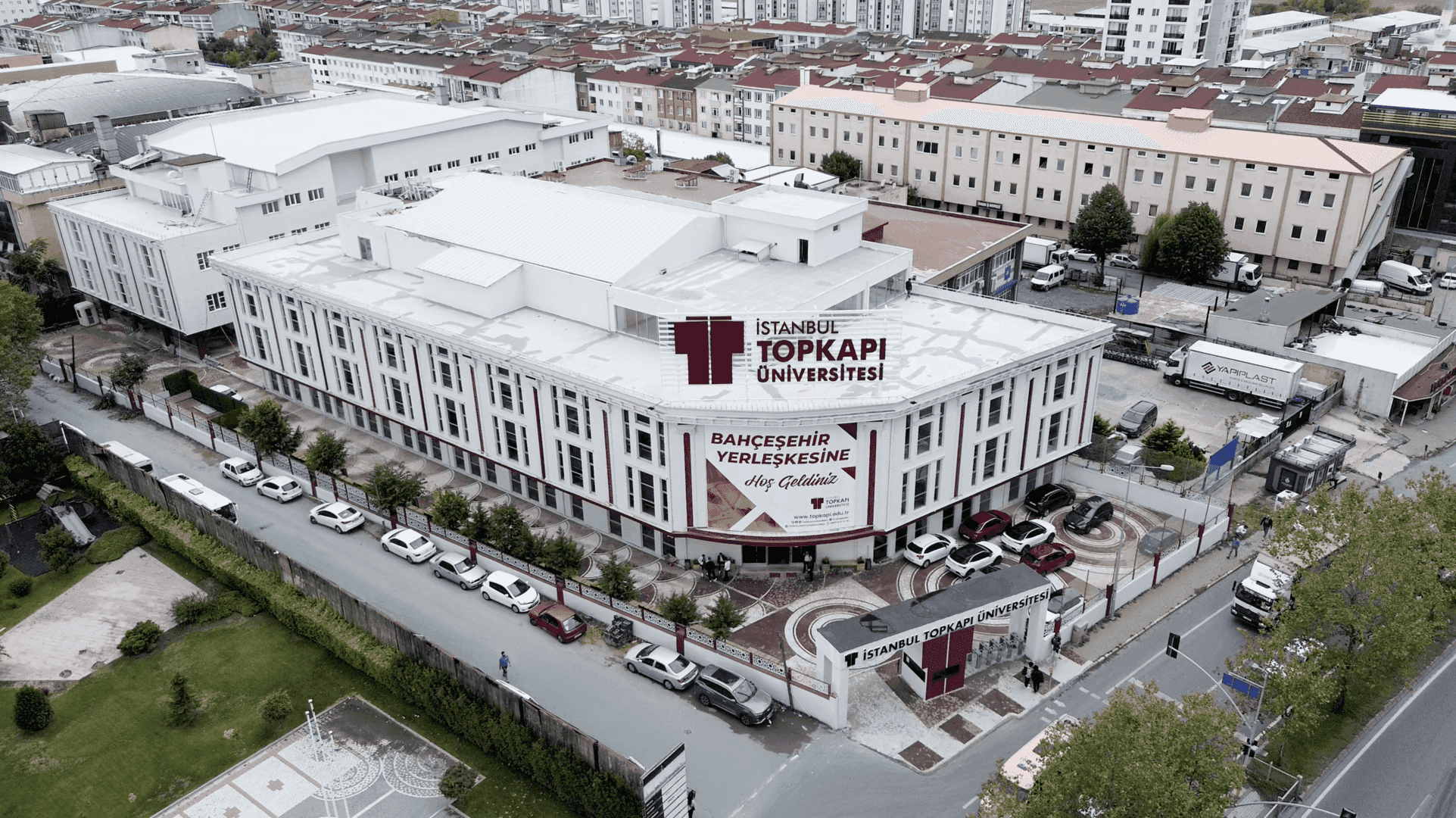
In March 2022, the university entered a new era when it took its current name — İstanbul Topkapı Üniversitesi. The rebranding symbolized the institution's deep ties to Istanbul's rich historical and cultural heritage: Topkapı is not merely a geographical name but a reference to the legendary Topkapı Palace, which served for four centuries as the residence of the Ottoman sultans and a symbol of Istanbul's grandeur. Today İstanbul Topkapı Üniversitesi is a dynamically developing private university with six campuses covering a total area of about 150,000 square meters. The main Kazlıçeşme campus, known as the "Green Campus", is located in the Zeytinburnu district and houses the Faculty of Economics, Administration and Social Sciences, the Faculty of Fine Arts, Design and Architecture, and the Plato Vocational School. Additional campuses operate in Balat, Şişli, Altunizade, Yenibosna, Bahçeşehir and Levent, giving students convenient access to education from any part of the metropolis.
The university comprises seven faculties (engineering; economics, administration and social sciences; fine arts, design and architecture; sports sciences; health sciences; humanities and social sciences; communications), a Higher School of Education (master's and doctoral studies), a School of Foreign Languages, the Plato Vocational School, and seven research centers, including TÖMER (Turkish Language Center) and the Center for Migration Policy Studies. In total, the university offers 118 academic programs: 56 associate-degree programs, 35 bachelor's programs and more than 25 master's and doctoral programs in Turkish and English. The library holdings include more than 36,000 print volumes, 5,000 journals and 3,000 e-books. The university actively participates in the Erasmus+, Al-Farabi and Mevlana exchange programs, hosting students from 63 countries. Today more than 15,000 students study at the university, around 2,000 of them international, and the total number of alumni has exceeded 13,500. Student life is represented by 65 active clubs covering entrepreneurship, sports, music, psychology, design and many other fields.