
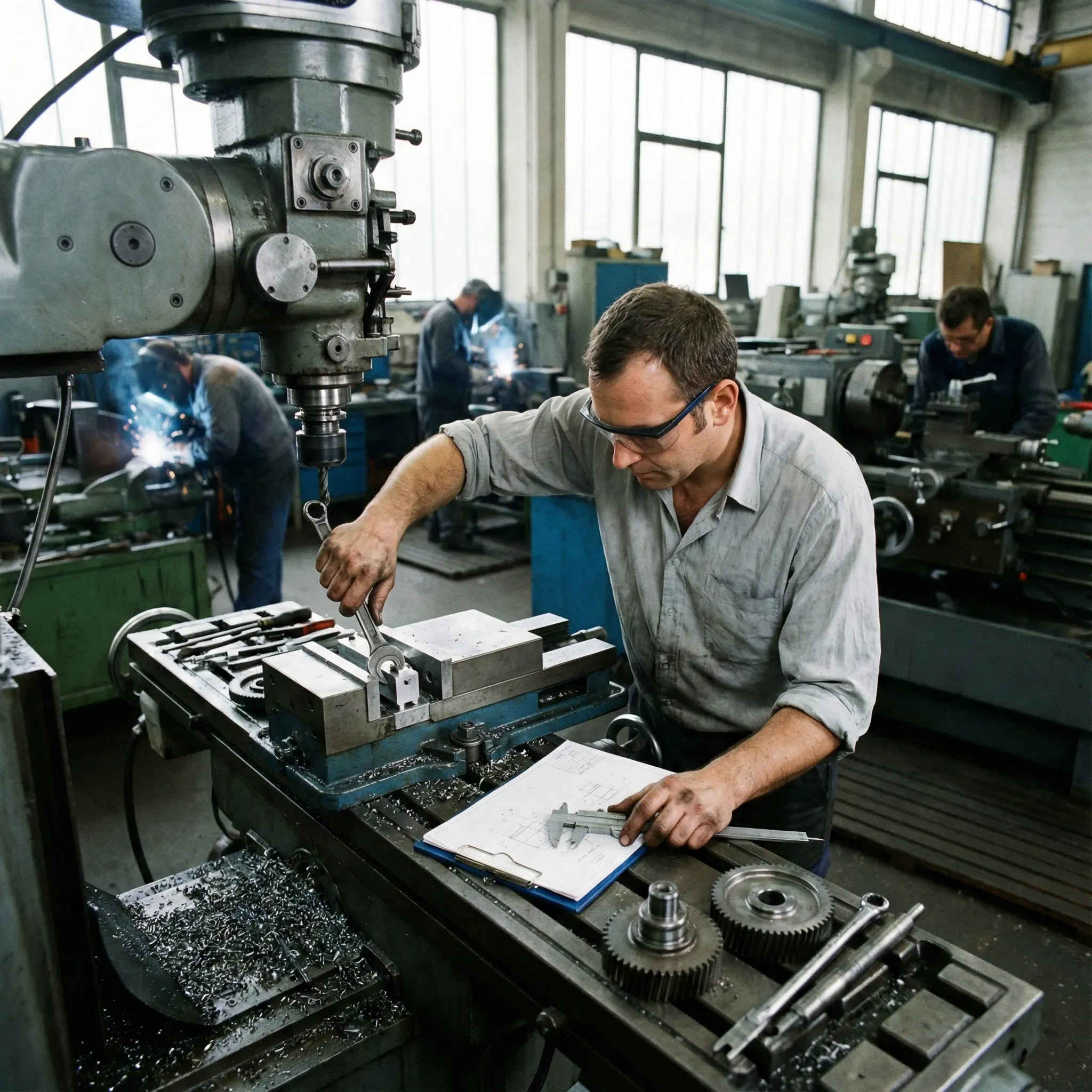
Mechanical engineering is the foundation of modern industry: from automobiles to spacecraft, from appliances to power plants. Four-year program in Turkish universities combines deep theoretical preparation with practical design and manufacturing skills.
About the Program
You'll study thermodynamics, material mechanics, hydraulics, and automation systems, while lab work and projects help apply knowledge in practice.
From the first year, you work on real engineering tasks: create CAD drawings, conduct calculations, and test prototypes. Graduates are in demand in automotive, aerospace, energy industries and manufacturing — wherever specialists capable of designing and optimizing mechanical systems are needed.
Who is this specialty for?
This specialty is for you if you:
Mechanics fascinate
You understand technology to figure out how it works.
Math and physics are favorites
You easily solve problems and see patterns.
Attention to detail
Helps design reliable systems where every element matters.
Complex challenges motivate
Enjoy finding engineering solutions.
Curriculum
Mechanical engineering program in Turkey is built from fundamental sciences to specialized engineering disciplines.
Year 1: Foundation
- Introduction to Mechanical Engineering — industry overview and its possibilities
- Engineering Mathematics — advanced calculation methods
- Physics — mechanics, thermodynamics, and electricity
- Engineering Graphics — drafting and working with CAD systems
Years 2-3: Specialized Disciplines
- Material Mechanics — material behavior under load
- Thermodynamics — laws of energy transformation
- Hydraulics — fluid and gas movement in systems
- Theory of Machines and Mechanisms — designing kinematic systems
- Materials Science — properties and material selection
Year 4: Specialization
- Automation Systems — controlling production processes
- Machine Design — creating mechanical systems from scratch
- Internship — work in manufacturing or engineering company
- Diploma Project — comprehensive engineering work
Career Prospects
Mechanical engineers are in demand across various industries — from automotive to aerospace. The program gives skills that open doors to leading companies worldwide.
- Mechanical Engineer — designing and developing mechanical systems, $60,000–100,000 per year
- Aerospace Engineer — working on aircraft and spacecraft, $70,000–120,000 per year
- Automotive Engineer — creating and testing vehicles, $65,000–110,000 per year
- Manufacturing Engineer — optimizing production processes, $60,000–95,000 per year
- Energy Engineer — developing generation and distribution systems, $65,000–105,000 per year
Interesting Fact
Did you know the first steam engine was invented in the 1st century AD? Ancient Greek engineer Hero of Alexandria created the aeolipile — a rotating sphere driven by steam.
Although it was just a curiosity then, this principle laid the foundation for the Industrial Revolution 1700 years later. Mechanical engineering is a history of constant innovation, and today engineers continue creating technologies that change the world. Studying in Turkey, you become part of this tradition.
Student Life
Student life for mechanical engineers in Turkey combines study and practice. You participate in engineering competitions where teams design and build real devices — from racing cars to robots.
- Engineering Competitions — designing and creating real devices
- Robotics Clubs — working on own projects and exchanging experience
- Networking — conferences, seminars, and meetings with engineers from leading companies
- Internships — work in manufacturing, aerospace company, or energy enterprise
- Modern Laboratories — equipment for experiments and prototyping
Being a mechanical student in Turkey means not just studying theory but creating real things with your hands.