
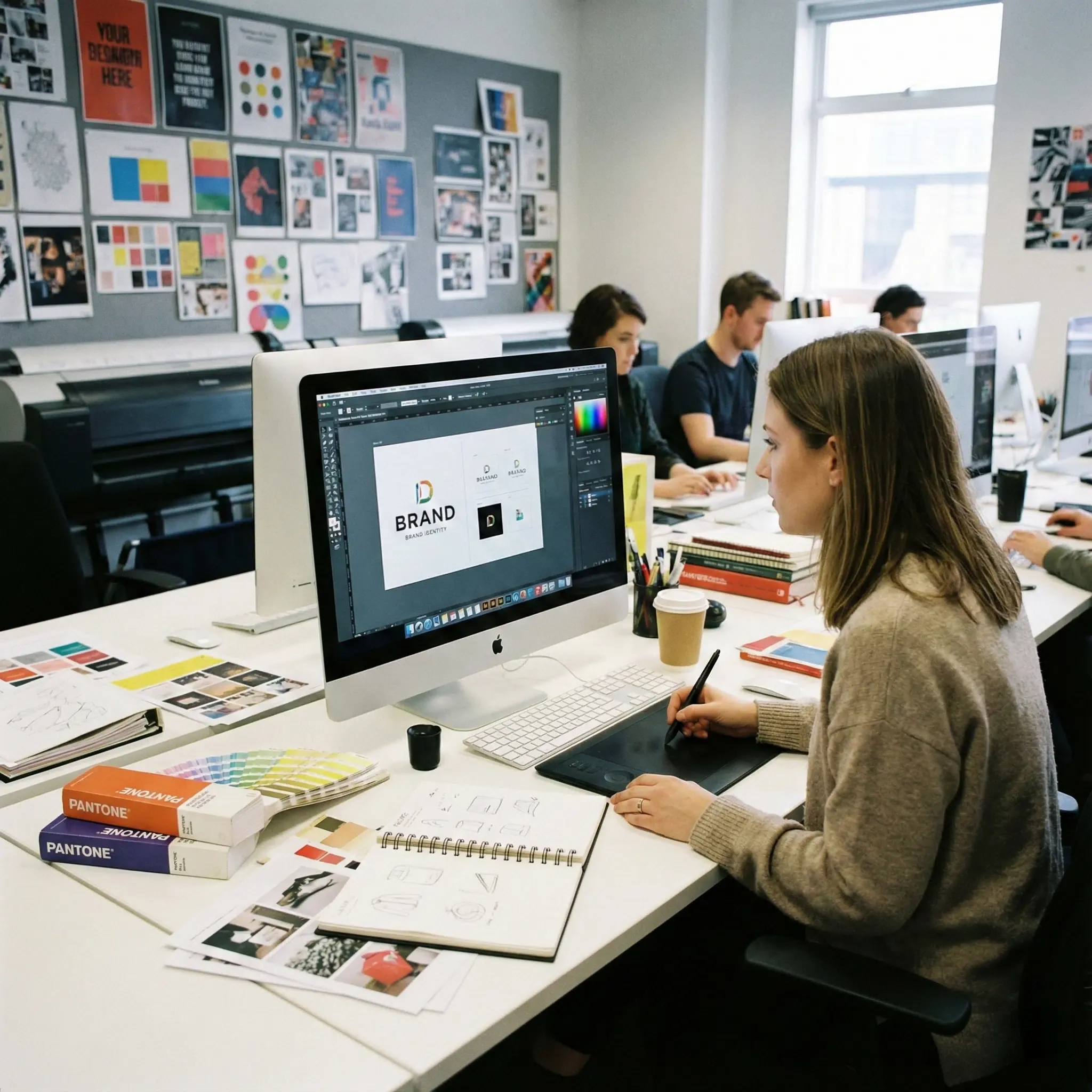
Graphic design in Turkey is an immersion into the world of visual creativity where ideas take form and images tell stories. The four-year program prepares specialists capable of creating impressive visual content for various fields — from advertising and branding to web design and multimedia projects.
About the Program
Students master fundamental design principles, study art history, and dive into the world of digital technologies while working on real projects. Graduates become in-demand specialists in advertising agencies, IT companies, publishing houses, and media holdings.
From the first days of study, students find themselves in a creative environment where theoretical knowledge is immediately applied in practice. The program includes studying typography, color theory, and visual communication, while elective courses and project work allow everyone to find their unique style and specialization in the world of design.
Who is this specialty for?
This specialty is for you if you:
Passionate about visual art
Design for you is not just work but a way of self-expression, and you're ready to spend hours perfecting every detail of a project.
Creative personality
Love generating ideas, experimenting with forms and colors, creating something new and unique.
Attention to detail
Understand that in design every line, every pixel matters, and you strive for flawless results.
Love solving visual problems
Enjoy finding creative solutions and turning complex ideas into understandable images.
Curriculum
The graphic design program in Turkey is a structured journey from the basics of visual art to professional mastery. Over four years, students master the full spectrum of skills needed by modern designers.
Year 1 — Foundation of the Profession
- Introduction to Graphic Design — principles of visual communication and industry introduction
- Art and Design History — understanding the evolution of visual culture
- Drawing and Illustration — hand graphics skills and artistic vision
- Professional Software — mastering Adobe Creative Suite and Figma
Years 2-3 — Skill Development
- Typography — working with fonts as the basis of visual communication
- Branding and Identity — creating corporate styles for companies
- Web and UI/UX Design — designing digital interfaces
- Print Design — printing, packaging, and editorial design
- Motion Design — animation and video graphics
Year 4 — Specialization
- Elective Courses — choosing narrow specialization by interest
- Internships — practice in design agencies and corporate departments
- Diploma Portfolio — creating a professional collection of works
Career Prospects
Graduates of the graphic design program in Turkey discover a wide range of career opportunities in the fast-growing creative industry. Design skills are in demand in virtually any business sector, and acquired knowledge and portfolio become a passport to the world of creative professions.
- Graphic Designer — creating visual concepts for brands, advertising campaigns, and print materials. Salary: $40,000–80,000 per year
- Web Designer — designing website and application interfaces, creating user-friendly experiences. Salary: $50,000–90,000 per year
- Brand Designer — developing corporate styles from logos to complete visual identity systems. Salary: $45,000–85,000 per year
- Illustrator — creating unique images for books, magazines, advertising, and digital media. Salary: $40,000–75,000 per year
- Art Director — leading creative projects and design teams. Salary: $60,000–120,000 per year
Student Life
Student life for future designers in Turkey is an immersion in a creative atmosphere where every day brings new ideas and inspiration. Beyond the classroom, a world of opportunities for professional growth and self-realization opens up.
- Design Competitions — participating in prestigious competitions where works are evaluated by recognized industry experts
- Industry Conferences — masterclasses from famous designers and lectures from creative directors of major brands
- Design Club — space for exchanging ideas, joint projects, and creative experiments
- Internships — practice in design agencies, corporate departments, and startups
Interesting Fact
The term "graphic design" first appeared in 1922 thanks to American designer William Addison Dwiggins, who was looking for a way to describe a new profession combining typography, illustration, and layout.
Since then, the industry has undergone several revolutions: from the advent of computer graphics to the era of mobile interfaces and artificial intelligence. Today, graphic design is one of the most dynamic and influential professions in the world, shaping visual culture and defining how we perceive information.