
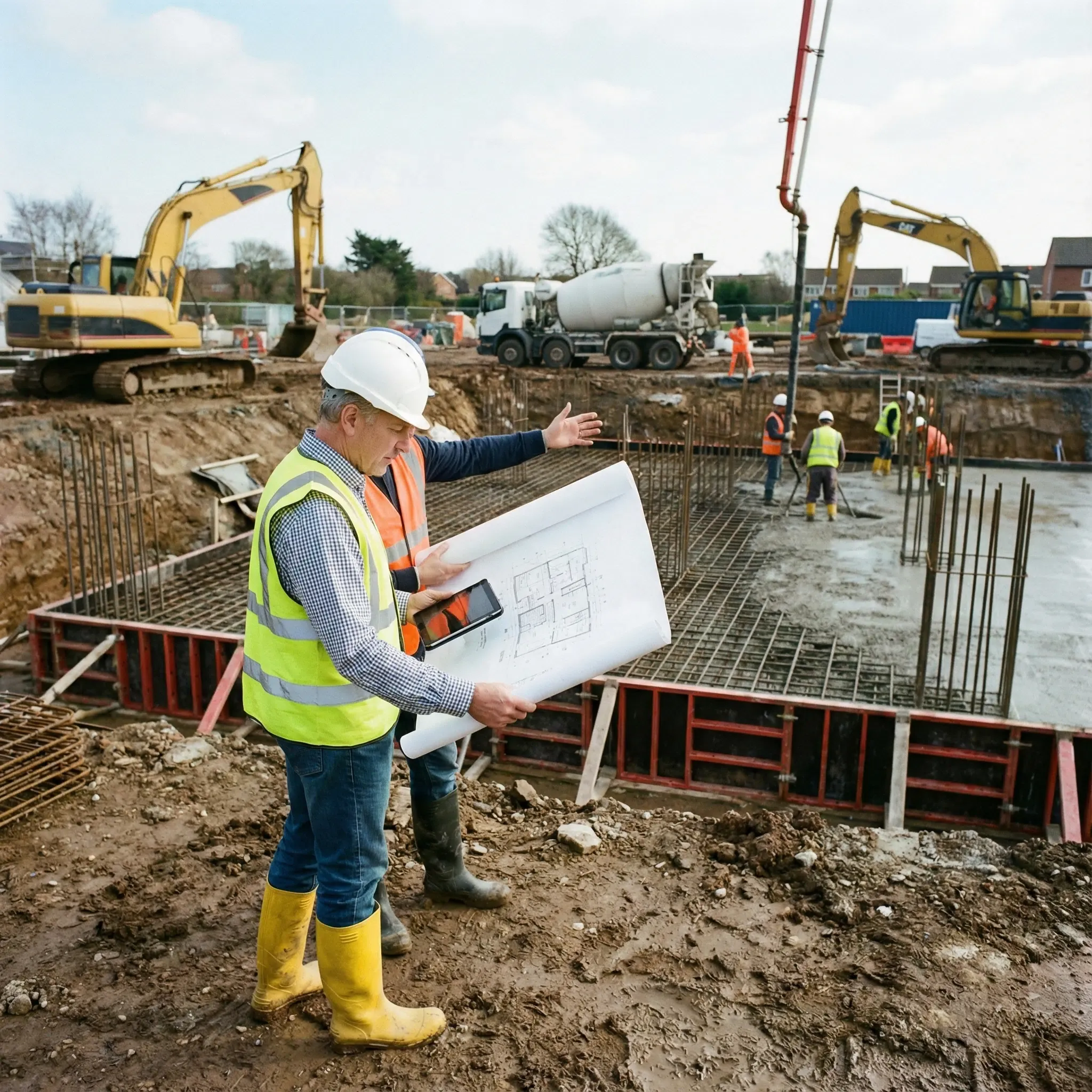
Want to build bridges, skyscrapers, and roads that will serve people for decades? The civil engineering program in Turkish universities will teach you to design, build, and maintain infrastructure that shapes modern cities.
About the Program
Over four years of intensive study, you'll master engineering mathematics, structural physics, structural design, geotechnics, and transportation engineering.
The program perfectly combines theory with practice: you'll work on real projects, visit construction sites, and intern at leading construction companies. After graduation, doors open to construction corporations, engineering bureaus, government structures, and international projects.
From the first year, you'll study materials science, mechanics, and structural analysis, while electives let you dive into areas of interest — from seismic-resistant construction to environmental engineering.
Who is this specialty for?
This specialty is for you if you:
Construction inspires you
You look at bridges and skyscrapers not as ordinary person — you see engineering solutions and wonder how it's built.
Math and physics are strengths
Enjoy solving complex problems and calculations.
Attention to detail is superpower
In construction, no small details — every calculation affects safety.
Complex challenges motivate
The harder the problem, the more interesting finding the solution.
Curriculum
The civil engineering program in Turkish universities is your path from student to professional engineer capable of designing and building structures that last centuries.
Year 1: Engineering Foundation
- Introduction to Civil Engineering — industry history, main directions, and modern challenges
- Engineering Mathematics — advanced mathematics for structural calculations
- Physics for Engineers — mechanics, thermodynamics, and other sections
- Engineering Graphics and CAD — technical drawings, AutoCAD, Revit
Years 2-3: Deep Dive into Specialty
- Strength of Materials — strength and deformation of structures
- Structural Mechanics — statics and dynamics of structures
- Geotechnics — soil investigation and foundation design
- Hydraulics and Hydrology — water movement and water structures
- Reinforced Concrete Design — calculation and reinforcement
- Steel Structure Design — metal frames and connections
Year 4: Specialization and Practice
- Seismic-Resistant Construction — design for earthquakes
- Transportation Engineering — roads, bridges, and interchanges
- Construction Project Management — organization and control
- Internship — work in construction company or engineering bureau
- Diploma Project — full engineering project
Career Prospects
A civil engineering diploma from a Turkish university opens doors to one of the most stable and in-demand professions. As long as cities exist, there will be people who build them.
- Design Engineer — designing buildings, bridges, and tunnels, $65,000–110,000 per year
- Geotechnical Engineer — soil investigation and foundation design, $60,000–100,000 per year
- Transport Engineer — designing roads and transportation systems, $65,000–105,000 per year
- Environmental Engineer — water purification and waste management, $60,000–95,000 per year
- Construction Manager — managing projects and teams, $70,000–130,000 per year
Interesting Fact
Civil engineering is one of humanity's oldest professions. The Great Wall of China stretched over 21,000 kilometers, and Roman aqueducts built 2,000 years ago still function in parts of Europe.
Turkey is a unique place to study construction: here you can see ancient ruins, Byzantine temples, Ottoman mosques and ultra-modern megaprojects like the third Bosphorus bridge and Istanbul's new airport. Studying here gives you the opportunity to study engineering heritage of thousands of years and participate in creating future infrastructure.
Student Life
Student life in civil engineering faculty in Turkey is not just lectures and calculations. It's immersion in the real engineering world where theory meets practice at every step.
- Construction Site Visits — visiting skyscrapers, bridges, and tunnels
- Engineering Competitions — bridge and building design competitions
- Networking — conferences, exhibitions, and masterclasses with leading engineers
- Student Organizations — civil engineering clubs for experience exchange
- Internships — work in largest construction companies in Turkey and the world
Turkey is a country of massive construction projects, and you'll have the opportunity to see them from inside.